Hey there! As a supplier of linear guideways, I often get asked about what straightness means in the context of these essential components. So, let's dive right in and break it down.
First off, what are linear guideways? They're like the highways for your machinery's moving parts. They provide a smooth, straight path for linear motion, allowing components to move back and forth with precision. Think of them as the tracks that trains run on, but for your industrial equipment. And straightness is a super important factor when it comes to how well they work.
What is Straightness?
Straightness, in simple terms, refers to how closely a linear guideway follows a perfectly straight line. You can think of it as the measure of how "true" the guideway is. In an ideal world, a linear guideway would be as straight as an arrow, with no deviations or curves. But in reality, achieving absolute straightness is almost impossible due to manufacturing processes and material limitations.
Why does straightness matter so much? Well, if a linear guideway isn't straight, it can cause all sorts of problems. For one, it can lead to uneven wear on the guideway and the moving parts that run on it. This uneven wear can shorten the lifespan of both the guideway and the equipment it's used in. It can also affect the accuracy of the linear motion. If the guideway isn't straight, the moving parts might not move exactly where they're supposed to, which can be a huge issue in applications that require high precision, like in the semiconductor industry or in CNC machining.
Measuring Straightness
Measuring the straightness of a linear guideway is no easy feat. There are several methods that can be used, and each has its own pros and cons.
One common method is the use of a straightedge and a feeler gauge. A straightedge is a long, flat piece of metal that's known to be very straight. You place the straightedge along the length of the guideway and then use a feeler gauge to measure the gap between the straightedge and the guideway at different points. The smaller the gap, the straighter the guideway. This method is relatively simple and inexpensive, but it's not very accurate for very small deviations.
Another method is the use of laser interferometry. This is a more advanced and accurate method. A laser beam is directed along the length of the guideway, and the interference pattern of the laser light is measured. Any deviations in the guideway will cause changes in the interference pattern, which can be used to calculate the straightness. Laser interferometry can measure very small deviations with high precision, but it's also more expensive and requires specialized equipment and trained operators.
Factors Affecting Straightness
There are several factors that can affect the straightness of a linear guideway. One of the main factors is the manufacturing process. During the manufacturing of the guideway, there can be all sorts of things that go wrong. For example, if the material isn't properly heat-treated, it can warp or bend, which will affect the straightness. Also, any errors in the machining process, like incorrect cutting depths or tool wear, can lead to deviations in the straightness.
The material of the guideway also plays a role. Different materials have different properties, and some materials are more prone to warping or bending than others. For example, steel is a commonly used material for linear guideways because it's strong and durable, but it can still be affected by heat and stress. Aluminum, on the other hand, is lighter but may not be as rigid as steel, which can also affect the straightness.
Environmental factors can also have an impact on the straightness of a linear guideway. Temperature changes can cause the guideway to expand or contract, which can lead to changes in its straightness. Humidity can also affect the material of the guideway, especially if it's made of a metal that's prone to corrosion.
Importance in Different Applications
The importance of straightness varies depending on the application. In some applications, like in a simple conveyor system, a slightly less straight guideway might still work just fine. The conveyor doesn't need to move with extremely high precision, so a small deviation in the straightness might not cause any major issues.
However, in other applications, like in a medical imaging device or in a precision optical instrument, straightness is absolutely crucial. These applications require very high precision, and even the slightest deviation in the straightness of the guideway can affect the performance of the device. For example, in a medical imaging device, if the guideway isn't straight, the imaging components might not move accurately, which can lead to blurry or inaccurate images.
Our Linear Guideways and Straightness
As a supplier of linear guideways, we take straightness very seriously. We use state - of - the - art manufacturing processes and quality control measures to ensure that our guideways are as straight as possible. Our manufacturing facilities are equipped with the latest machinery and technology, which allows us to produce guideways with very high straightness tolerances.
We also have a strict quality control system in place. Every single guideway that we produce is carefully inspected for straightness using advanced measuring equipment. We don't just rely on one method of measurement; we use a combination of methods to ensure the accuracy of our measurements.
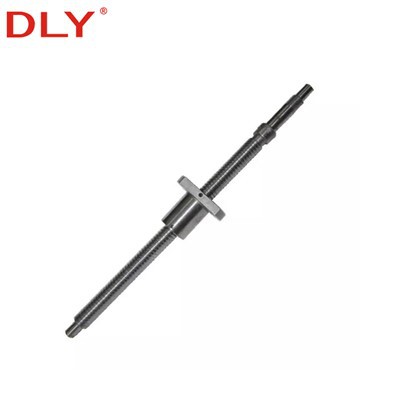
In addition to linear guideways, we also offer other related products, such as SFU2010 Ball Screw, Linear Motion Shaft, and Linear Motion Stage. These products are also designed and manufactured with the same attention to detail and quality as our linear guideways.
Conclusion
In conclusion, straightness is a critical characteristic of linear guideways. It affects the performance, accuracy, and lifespan of the guideways and the equipment they're used in. Measuring and ensuring straightness is a complex process that requires advanced technology and strict quality control.
If you're in the market for high - quality linear guideways or any of our other related products, don't hesitate to reach out. We're here to help you find the right solutions for your specific needs. Whether you're in the manufacturing industry, the medical field, or any other industry that requires linear motion, we've got you covered. Contact us today to start a discussion about your procurement needs.
References
- Smith, J. (2020). Linear Motion Technology Handbook. Publisher XYZ.
- Johnson, A. (2019). Precision Manufacturing and Metrology. ABC Press.
Phone Number/Whatsapp:+8618957070963
Email:export@dlybearing.com