


As industrial equipment becomes smaller, faster, and more precise, the demand for compact motion systems continues to grow. In many modern machines, engineers are no longer only concerned about load capacity or travel distance - installation space, vibration control, and machine height have become equally important.
This is why low profile linear guides are increasingly used in automation, medical equipment, electronics manufacturing, and precision motion systems.
Compared with standard linear guideways, low profile linear guides feature a lower assembly height and a more compact structure. They help reduce the overall machine height while maintaining smooth linear motion and positioning accuracy.
Today, they are widely used in industries where compact design and precision movement are critical.
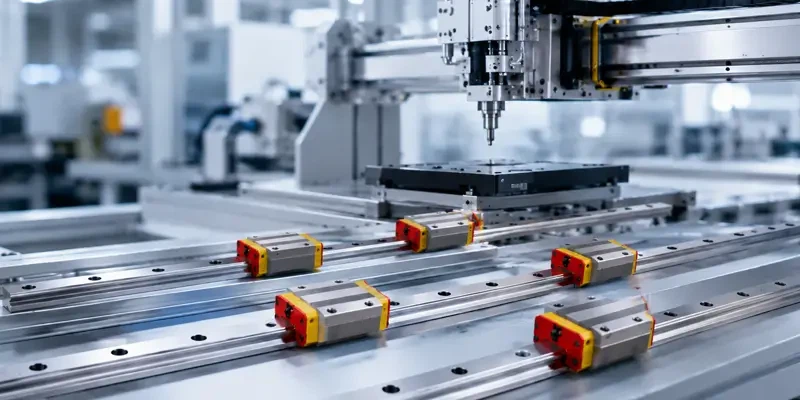
What Is a Low Profile Linear Guide?
A low profile linear guide is a type of linear motion guideway designed with a reduced height and compact cross-sectional structure.
Typical features include:
- Lower installation height
- Compact guide block design
- Smooth and stable movement
- Reduced vibration during motion
- Lightweight moving structure
- Better space utilization inside equipment
Compared with heavy-duty square linear guides, low profile models are usually optimized for medium or light loads, high-speed movement, and precision positioning.
Common examples include miniature linear guides and compact profile rail systems used in precision automation machinery.
Why Do Machines Use Low Profile Linear Guides?
In many modern industrial applications, internal machine space is extremely limited.
Engineers often face challenges such as:
- Reducing machine size
- Improving motion stability
- Lowering moving platform weight
- Increasing operating speed
- Maintaining positioning accuracy
A lower guide assembly height helps reduce the center of gravity of the moving system, which improves stability during high-speed motion.
This is especially important in compact automation equipment where vibration can directly affect product quality and precision.
Applications of Low Profile Linear Guides
1. Electronics Manufacturing Equipment
The electronics industry is one of the largest application areas for low profile linear guides.
Machines such as:
- SMT pick-and-place machines
- PCB drilling equipment
- Laser marking systems
- Glue dispensing machines
- Electronic inspection systems
all require extremely precise and fast linear movement within a compact machine structure.
Low profile guides help reduce machine size while maintaining smooth operation and positioning accuracy.
In high-speed electronic assembly lines, reduced vibration and lightweight moving components are major advantages.
2. Medical and Laboratory Equipment
Medical automation equipment often requires quiet, smooth, and highly accurate motion systems.
Typical applications include:
- Medical testing equipment
- CT scanning platforms
- Laboratory automation systems
- DNA analysis equipment
- Liquid handling systems
Low profile linear guides are ideal for these machines because they offer stable movement with minimal operating noise and reduced inertia.
Compact guide structures also allow medical equipment manufacturers to design smaller and more ergonomic machines.
3. Compact Automation Systems
Modern factories increasingly use small automation modules and lightweight motion systems.
Examples include:
- Small robotic arms
- XY positioning tables
- Automatic screw locking machines
- Battery assembly equipment
- Compact transfer systems
In these applications, engineers often need to maximize travel distance while minimizing machine size.
A low profile guide design allows more usable space inside the equipment without sacrificing motion performance.
4. Laser and Optical Equipment
Laser processing and optical inspection systems require highly stable linear motion.
Even small vibrations can affect cutting accuracy, detection precision, or image quality.
Low profile linear guides are commonly used in:
- Laser engraving machines
- Laser cutting equipment
- CCD visual inspection systems
- Optical alignment platforms
- Precision measuring systems
Because the moving structure has a lower center of gravity, the system remains more stable during rapid acceleration and deceleration.
5. 3C Industry Equipment
The manufacturing of smartphones, tablets, cameras, and consumer electronics requires extremely compact and high-speed production equipment.
Applications include:
- Camera module assembly machines
- Screen inspection equipment
- FPC bonding machines
- Smartphone assembly systems
- Precision dispensing platforms
These machines often operate continuously at high speed, making smooth motion and compact mechanical design essential.
Low profile linear guides help manufacturers achieve both.
6. Small CNC Machines and Desktop Equipment
Some light-duty CNC equipment and desktop automation systems also use low profile linear guides.
Typical examples:
- Desktop CNC routers
- Small engraving machines
- Compact 3D printers
- Educational automation systems
Their compact size and lightweight structure make them suitable for smaller motion platforms where heavy cutting loads are not required.
Advantages of Low Profile Linear Guides
Compared with standard linear guideways, low profile designs provide several advantages:
Space Saving
Their compact structure reduces installation height and allows more flexible machine layouts.
Better Stability
A lower center of gravity improves motion smoothness and reduces vibration.
Lightweight Motion System
Smaller guide blocks reduce moving mass, helping improve acceleration and efficiency.
High Precision Motion
Suitable for precision positioning applications requiring repeatability and smooth movement.
Ideal for Compact Equipment
Especially useful in modern automation machines with strict space limitations.
Limitations of Low Profile Linear Guides
Although low profile guides have many advantages, they are not suitable for every application.
Compared with heavy-duty square linear guides, they generally have:
- Lower load capacity
- Lower moment resistance
- Reduced rigidity under heavy cutting force
For heavy machining centers, large gantry systems, or high-impact industrial machinery, larger heavy-duty linear guideways are usually a better choice.
Choosing the correct linear guide depends on:
- Load conditions
- Installation space
- Operating speed
- Required rigidity
- Precision requirements
How to Choose the Right Low Profile Linear Guide
When selecting a low profile linear guide, engineers should evaluate:
- Dynamic and static load requirements
- Installation dimensions
- Required travel speed
- Environmental conditions
- Precision grade
- Expected service life
For compact automation equipment, selecting the correct guide size and preload can significantly improve machine performance and reliability.
Conclusion
Low profile linear guides play an important role in modern precision machinery and compact automation equipment.
As industries continue moving toward smaller, faster, and more intelligent systems, compact linear motion solutions are becoming increasingly important.
From electronics manufacturing and medical devices to laser equipment and small automation systems, low profile linear guides help engineers achieve stable, precise, and space-efficient motion performance.
For manufacturers designing compact industrial equipment, choosing the right low profile linear guide can improve machine stability, optimize internal space, and enhance overall production efficiency.
DLY Linear Motion specializes in the manufacturing of linear guideways, ball screws, linear shafts, and motion components for industrial automation applications.
DLY provides:
- Low profile linear guides
- Miniature linear guides
- Heavy-duty guideways
- OEM customization support
- Fast production and delivery
- Factory-direct technical support
With over 20 years of manufacturing experience, DLY supports global distributors, automation equipment manufacturers, and industrial machinery suppliers worldwide.


