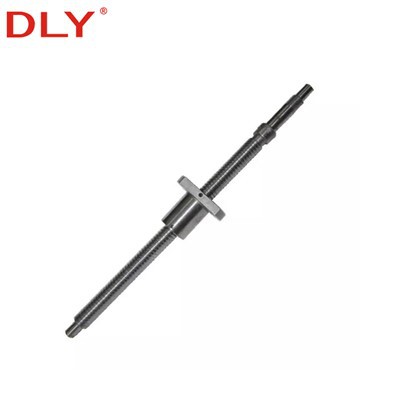
When it comes to rotating ball nuts, proper lubrication is not just a luxury; it's a necessity. As a trusted rotating ball nut supplier, I've witnessed firsthand the impact of the right lubrication on the performance and longevity of these critical components. In this blog, I'll delve into the types of lubrication required for rotating ball nuts, why they matter, and how to make the best choices for your applications.
Why Lubrication is Crucial for Rotating Ball Nuts
Rotating ball nuts are essential in many mechanical systems, converting rotary motion into linear motion with high efficiency. They operate under high loads and speeds, which generate friction and heat. Without adequate lubrication, this friction can lead to premature wear, increased energy consumption, and even system failure. Lubrication serves several key functions:
- Reducing Friction: By creating a thin film between the ball and the raceway, lubrication minimizes the contact area and reduces the frictional forces. This not only improves the efficiency of the ball nut but also extends its service life.
- Dissipating Heat: The heat generated by friction can cause thermal expansion and damage to the ball nut components. Lubrication helps to dissipate this heat, maintaining the temperature within a safe operating range.
- Preventing Corrosion: Rotating ball nuts are often exposed to harsh environments, including moisture and chemicals. Lubrication acts as a protective barrier, preventing corrosion and rust from forming on the surfaces.
- Reducing Noise and Vibration: A well - lubricated ball nut operates more smoothly, reducing noise and vibration levels. This is particularly important in applications where quiet operation is required, such as in precision machinery and medical equipment.
Types of Lubrication for Rotating Ball Nuts
There are two main types of lubrication used for rotating ball nuts: grease and oil. Each type has its own advantages and disadvantages, and the choice depends on several factors, including the application requirements, operating conditions, and the design of the ball nut.
Grease Lubrication
Grease is a popular choice for lubricating rotating ball nuts due to its simplicity and long - term lubrication properties. It consists of a base oil, a thickener, and various additives.
- Advantages:
- Long - lasting lubrication: Grease stays in place for a longer time compared to oil, providing continuous lubrication without the need for frequent re - application.
- Sealing properties: Grease can act as a sealant, preventing contaminants from entering the ball nut and protecting the internal components.
- Easy to apply: Grease can be easily applied during the installation of the ball nut or during maintenance.
- Disadvantages:
- Limited heat dissipation: Grease has a lower thermal conductivity than oil, which means it is less effective at dissipating heat. This can be a problem in high - speed or high - load applications.
- Increased drag: Grease can create more drag compared to oil, which may slightly reduce the efficiency of the ball nut.
When choosing a grease for a rotating ball nut, it's important to consider the following factors:
- Base oil viscosity: The viscosity of the base oil affects the lubricating properties of the grease. A higher viscosity is suitable for high - load applications, while a lower viscosity is better for high - speed applications.
- Thickener type: Different thickeners have different properties, such as temperature resistance and water resistance. For example, lithium - based greases are widely used due to their good all - around performance.
- Additives: Additives can enhance the performance of the grease, such as anti - wear additives, rust inhibitors, and extreme pressure additives.
Oil Lubrication
Oil lubrication is another option for rotating ball nuts, especially in applications where high - speed operation, efficient heat dissipation, or low drag is required.


- Advantages:
- Excellent heat dissipation: Oil has a higher thermal conductivity than grease, making it more effective at dissipating heat. This is crucial in high - speed or high - load applications.
- Low drag: Oil creates less drag compared to grease, which can improve the efficiency of the ball nut.
- Precise lubrication: Oil can be delivered precisely to the contact points between the ball and the raceway, ensuring optimal lubrication.
- Disadvantages:
- Frequent re - application: Oil tends to leak or evaporate over time, requiring more frequent re - application compared to grease.
- Lack of sealing properties: Oil does not provide the same level of sealing as grease, which means that contaminants may enter the ball nut more easily.
When using oil lubrication, the following factors should be considered:
- Viscosity: The viscosity of the oil should be selected based on the operating conditions. A lower viscosity oil is suitable for high - speed applications, while a higher viscosity oil is better for high - load applications.
- Oil type: There are different types of oils available, such as mineral oils, synthetic oils, and semi - synthetic oils. Synthetic oils generally offer better performance in terms of temperature resistance and oxidation stability.
Lubrication Considerations for Different Rotating Ball Nut Models
As a rotating ball nut supplier, we offer a variety of models, including the 1204 Nut, SFA Nuts, and 1605 Nut. Each model has its own specific lubrication requirements.
- 1204 Nut: This nut is often used in applications with moderate loads and speeds. Grease lubrication is usually sufficient for most 1204 Nut applications. A lithium - based grease with a medium - viscosity base oil is a good choice. However, in high - speed or high - precision applications, oil lubrication may be preferred.
- SFA Nuts: SFA Nuts are designed for high - performance applications. They often operate at high speeds and under heavy loads. Oil lubrication is typically recommended for SFA Nuts to ensure efficient heat dissipation and low drag. A synthetic oil with a low viscosity and good oxidation stability is ideal.
- 1605 Nut: The 1605 Nut is suitable for a wide range of applications. Grease lubrication can be used for general applications, while oil lubrication may be necessary for high - speed or high - load scenarios. The choice of lubricant should be based on the specific operating conditions of the application.
Best Practices for Lubricating Rotating Ball Nuts
To ensure optimal performance and longevity of rotating ball nuts, the following best practices should be followed:
- Proper Cleaning: Before lubrication, the ball nut should be thoroughly cleaned to remove any contaminants, such as dirt, dust, and old lubricant. This can be done using a suitable cleaning solvent.
- Correct Lubricant Quantity: Applying the right amount of lubricant is crucial. Too little lubricant may result in insufficient lubrication, while too much lubricant can cause overheating and increased drag. Refer to the manufacturer's recommendations for the correct lubricant quantity.
- Regular Maintenance: Regular maintenance is essential to check the condition of the lubricant and the ball nut. Lubricant should be replenished or replaced at the recommended intervals. Visual inspections should also be carried out to detect any signs of wear, damage, or contamination.
- Environmental Considerations: The operating environment can have a significant impact on the performance of the lubricant. In harsh environments, such as those with high humidity or extreme temperatures, special lubricants may be required.
Contact Us for Your Rotating Ball Nut Needs
As a professional rotating ball nut supplier, we have the expertise and experience to help you choose the right lubrication for your rotating ball nuts. Whether you need a 1204 Nut, SFA Nuts, or 1605 Nut, we can provide you with high - quality products and comprehensive technical support.
If you have any questions about lubrication or would like to discuss your specific requirements, please feel free to contact us. We look forward to working with you and helping you achieve the best performance from your rotating ball nuts.
References
- "Ball Screw Handbook" by Thomson Industries
- "Lubrication Fundamentals" by John W. Harris
- Technical documents from leading ball nut manufacturers