


A precision ball nut should be lubricated through its designated grease fitting or lubrication port with a lubricant selected for the actual speed, load, temperature and operating environment. Add the lubricant gradually, move the nut through an adequate stroke to distribute it and check running resistance before returning the machine to full-speed operation.
Both insufficient and excessive lubrication can cause problems. Too little lubricant may allow direct contact and accelerate raceway wear, while too much grease can increase churning resistance, heat and motor load. The correct lubricant type, quantity and relubrication interval should therefore be confirmed for the actual ball screw model rather than taken from a universal schedule.
Why Precision Ball Nuts Need Lubrication
Inside a precision ball nut, steel balls roll between the screw and nut raceways and then return through an internal or external circulation path. Lubrication forms a film at these rolling contacts and helps:
- Reduce friction and raceway wear;
- Limit heat generated by rolling and sliding contact;
- Maintain smoother running torque;
- Protect exposed steel surfaces against moisture and corrosion;
- Carry small wear particles away from critical contact areas;
- Support consistent noise and motion performance.
Lubrication cannot correct incorrect preload, poor alignment, damaged balls or contaminated raceways. If resistance, vibration or noise remains abnormal after correct lubrication, the complete ball screw installation should be inspected.
Grease or Oil: Which Should Be Used?
| Lubrication Method | Typical Advantages | Points to Check |
|---|---|---|
| Grease | Remains in the nut, simplifies maintenance and can provide longer intervals between applications | Consistency, base oil, operating temperature, speed, starting torque and grease compatibility |
| Oil | Can circulate continuously, remove some heat and support selected high-speed systems | Viscosity, supply rate, oil leakage, sealing, piping and continuous-delivery reliability |
Grease is commonly used in standard CNC and automation ball screw assemblies because it is easier to retain inside the nut. Oil lubrication is normally selected when the machine has an appropriate centralized system or when speed, heat and operating conditions justify continuous oil supply.
Graphite, molybdenum disulfide and other solid lubricants should not be treated as direct replacements for grease or oil in an ordinary precision ball nut. Vacuum, extreme-temperature, cleanroom or other special environments require a ball screw and lubricant designed and validated for that condition.
How to Select a Suitable Lubricant
Before applying a new lubricant, confirm:
- Ball screw and nut model;
- Operating speed and acceleration;
- Axial load and duty cycle;
- Normal and maximum operating temperature;
- Stroke length, especially for short reciprocating motion;
- Exposure to dust, chips, coolant, moisture or chemicals;
- Required starting torque and positioning stability;
- Compatibility with seals and the lubricant already inside the nut;
- Food, cleanroom or low-outgassing requirements, if applicable.
Do not mix different grease types simply because both are described as suitable for bearings or ball screws. Different base oils and thickeners may be incompatible, which can change grease consistency, oil separation and lubrication performance.
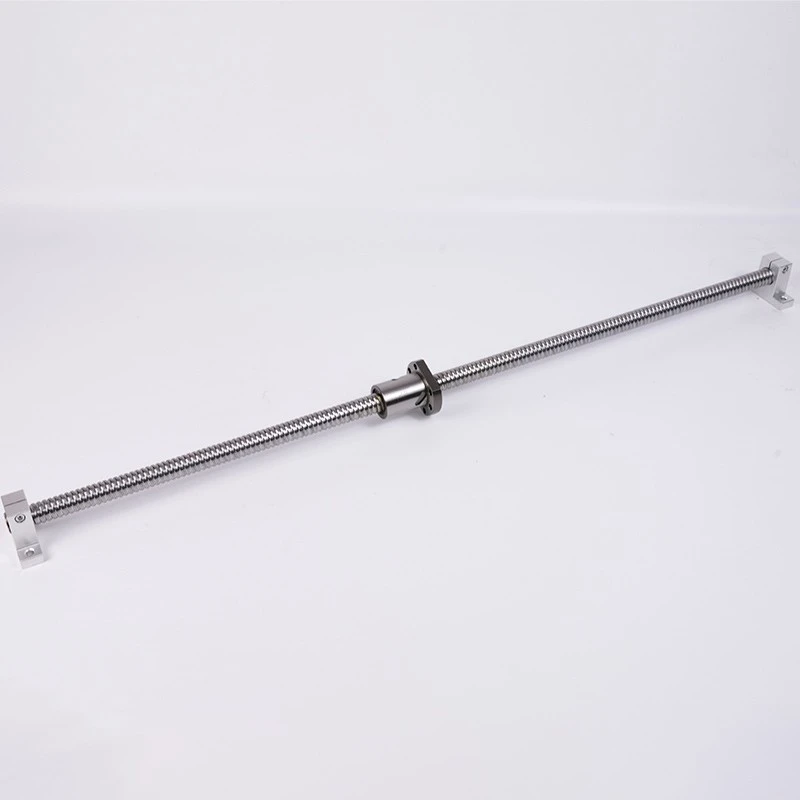

Step-by-Step Precision Ball Nut Lubrication
- Make the machine safe.
Stop the machine, isolate unintended movement and follow the equipment's maintenance and lockout procedure before working near the ball screw. - Inspect the screw and protection system.
Check the exposed screw surface, seals, bellows or protective cover for chips, dust, dried grease, moisture and visible damage. Do not force contamination through the seal while cleaning. - Clean the grease fitting or oil port.
Wipe the fitting and surrounding surface with a clean, lint-free cloth before connecting the grease gun or lubrication line. Dirt introduced through the fitting may be delivered directly into the nut. - Confirm the lubricant.
Check that the lubricant matches the required specification and is compatible with the lubricant already in use. Use clean dispensing equipment dedicated to that product where possible. - Add lubricant gradually.
Apply the specified quantity slowly through the designated lubrication port. If a grease gun is used, avoid rapid high-pressure injection. The correct amount depends on nut size, internal free volume, grease type and operating condition. - Move the nut to distribute the lubricant.
Move the nut slowly through the available stroke so the lubricant can spread through the loaded raceways and ball circulation path. Where the machine permits, movement over several nut-body lengths provides better distribution than a very short jog. - Check for excess grease and leakage.
Wipe away grease expelled onto external surfaces. Do not remove the grease intended to remain inside the raceway. Confirm that seals and lubrication fittings remain correctly positioned. - Perform a controlled test run.
Start at low speed and monitor noise, movement, temperature and drive load. Grease churning can temporarily increase running resistance after replenishment, so allow the lubricant to distribute before returning to full production speed.
How Much Grease Should Be Added?
There is no reliable universal quantity for every precision ball nut. The required amount depends on the nut's internal space, circulation structure, model size, lubricant and initial fill condition.
Some ball screw manufacturers use a fraction of the available space inside the nut as an initial reference, but this should not be converted into a fixed DLY value without the model-specific information. For relubrication, the required quantity may also differ from the initial fill.
Possible signs of insufficient lubrication include:
- Dry or inconsistent running sound;
- Increasing friction or drive load;
- Temperature rising progressively during operation;
- Discoloration or wear marks on exposed raceway surfaces;
- Loss of a visible lubricant film where one should be present.
Possible signs of excessive grease include:
- A noticeable increase in starting or running torque immediately after filling;
- Higher operating temperature caused by grease churning;
- Grease being repeatedly forced past the seals;
- Increased motor current despite correct mechanical alignment;
- Grease collecting contaminants on exposed surfaces.
These symptoms can have other causes. High torque may also result from excessive preload, misaligned support bearings, a nut housing pulling the nut sideways or a damaged raceway. Lubrication should therefore be assessed together with the complete installation.
How Often Should a Precision Ball Nut Be Relubricated?
A fixed interval such as every 20, 50 or 200 operating hours cannot be applied to all precision ball nuts. Relubrication depends on:
- Total travel distance and operating hours;
- Speed, acceleration and duty cycle;
- Load and preload condition;
- Operating temperature;
- Lubricant type and quantity;
- Seal effectiveness and contamination level;
- Coolant, moisture or chemical exposure;
- Short-stroke reciprocating operation.
Short-stroke motion deserves particular attention because the balls may repeatedly work within a limited raceway area and distribute lubricant less effectively through the complete nut. High temperature, contamination and frequent operation may also shorten the interval.
Use the equipment and lubricant recommendations as the starting point, then refine the interval from recorded operating conditions. A maintenance log should include the lubricant name, applied quantity, operating hours, observed condition and next planned inspection.
Common Lubrication Mistakes
- Adding new grease without identifying the existing product;
- Injecting grease through a dirty fitting;
- Using excessive pressure or filling the nut too quickly;
- Assuming more grease always provides better protection;
- Applying grease only to the exposed screw without supplying the nut's internal raceway;
- Cleaning the assembled nut internally with an unapproved solvent;
- Removing the ball nut from the screw during routine lubrication;
- Returning immediately to full speed without a controlled test run;
- Treating lubrication as a repair for misalignment or mechanical damage.
Do not remove a precision ball nut from its screw for routine lubrication. If removal is unavoidable, use a correctly sized transfer sleeve to prevent the balls from falling out or becoming displaced.
For lubrication of the complete screw and its support bearings, see How to Lubricate a Ball Screw and Its Support Bearings. Available nut structures can be reviewed in the DLY ball nut range.
Need to Identify a Precision Ball Nut?
Send DLY the ball nut model, screw diameter, lead, operating speed and application conditions. We can help confirm the nut type and corresponding ball screw specifications.
Email: export@dlybearing.com
Contact DLY


