As a supplier of linear guide sliders, I understand the critical role that torsional stiffness plays in the performance of these components. Torsional stiffness refers to a linear guide slider's ability to resist twisting forces when subjected to loads. A slider with high torsional stiffness ensures smooth, accurate, and stable linear motion, which is essential in various industrial applications such as automation, robotics, and CNC machining. In this blog, I will share some effective strategies to improve the torsional stiffness of a linear guide slider.
Material Selection
The choice of material is fundamental in enhancing the torsional stiffness of a linear guide slider. High - strength materials can better withstand torsional forces without significant deformation. For example, steel is a popular choice due to its excellent mechanical properties. Alloy steels, in particular, offer high strength and good toughness. They can be heat - treated to further improve their hardness and strength, which directly contributes to increased torsional stiffness.
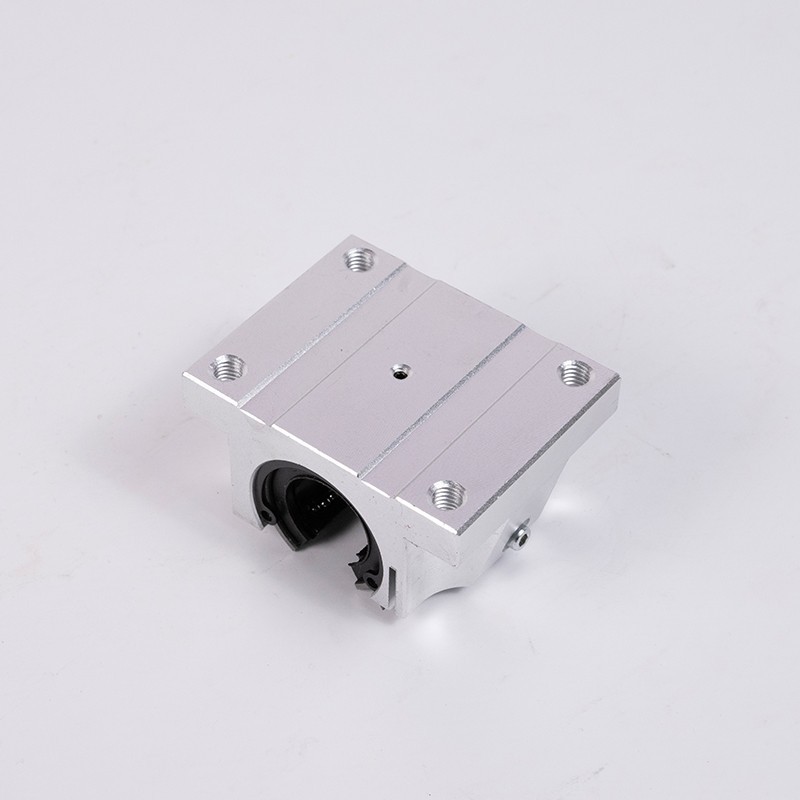

Another option is aluminum alloys. Although aluminum is lighter than steel, some high - performance aluminum alloys can provide relatively good torsional stiffness. Aluminum sliders, such as our Linear Bearing Series Aluminum Slides, are corrosion - resistant and have a lower mass, which can be beneficial in applications where weight reduction is a priority. However, it's important to note that the torsional stiffness of aluminum may not be as high as that of steel, so careful consideration of the application requirements is necessary.
Structural Design
The structural design of the linear guide slider has a significant impact on its torsional stiffness. A well - designed cross - sectional shape can distribute the torsional forces more evenly and reduce stress concentrations. For instance, a slider with a closed - loop or box - like cross - section is generally more torsionally stiff than one with an open or simple shape.
In addition, the thickness and width of the slider's walls also affect torsional stiffness. Increasing the wall thickness can enhance the slider's ability to resist twisting. However, this needs to be balanced with other factors such as weight and cost. The width of the slider can also play a role; a wider slider can provide more resistance to torsional forces, but it may also require more space in the application.
Our Linear Bearing Flanged Aluminum Slides are designed with flanges that add additional stiffness. The flanges help to distribute the load and increase the overall torsional resistance of the slider. This design feature is especially useful in applications where the slider is subjected to off - center or eccentric loads.
Bearing Configuration
The type and arrangement of bearings in the linear guide slider are crucial for improving torsional stiffness. High - precision bearings can provide better support and reduce the amount of play or deflection under torsional loads. For example, angular contact ball bearings are often used in linear guide sliders because they can handle both radial and axial loads, as well as some degree of moment loads, which is beneficial for torsional stiffness.
The number and spacing of bearings also matter. Using more bearings can increase the contact area between the slider and the guide rail, which helps to distribute the load more evenly and improve torsional stiffness. However, this may also increase the cost and complexity of the system. Proper spacing of the bearings is also important to ensure that they work together effectively to resist torsional forces.
Our Linear Sliding Unit Slider is equipped with a carefully selected bearing configuration. The bearings are arranged in a way that maximizes their support and minimizes the torsional deflection of the slider, providing reliable performance in various applications.
Manufacturing Precision
High - quality manufacturing processes are essential for achieving optimal torsional stiffness in linear guide sliders. Precision machining ensures that the dimensions of the slider and its components are accurate, which is crucial for proper fit and function. Any dimensional errors can lead to uneven load distribution and reduced torsional stiffness.
Surface finish also plays a role. A smooth surface finish on the slider and the guide rail can reduce friction and wear, which in turn can improve the overall performance and torsional stiffness of the system. Additionally, proper heat treatment and stress - relieving processes can enhance the material properties and reduce internal stresses, further improving the slider's ability to resist torsional forces.
Assembly and Installation
Correct assembly and installation of the linear guide slider are vital for maintaining its torsional stiffness. During assembly, all components should be properly aligned and tightened to the specified torque values. Loose or misaligned components can cause uneven loading and reduce the slider's torsional resistance.
When installing the slider, it's important to ensure that the guide rail is properly mounted and leveled. Any misalignment of the guide rail can introduce additional torsional forces on the slider, leading to premature wear and reduced performance. Following the manufacturer's installation instructions carefully can help to avoid these issues and ensure that the slider operates at its maximum torsional stiffness.
Maintenance
Regular maintenance is necessary to keep the linear guide slider in good condition and maintain its torsional stiffness over time. This includes cleaning the slider and the guide rail to remove dirt, debris, and contaminants that can cause wear and affect the performance of the bearings.
Lubrication is also crucial. Proper lubrication reduces friction between the moving parts, which helps to prevent wear and maintain smooth operation. Using the recommended lubricant and following the lubrication schedule can significantly extend the lifespan of the slider and ensure its continued torsional stiffness.
In conclusion, improving the torsional stiffness of a linear guide slider involves a combination of factors, including material selection, structural design, bearing configuration, manufacturing precision, assembly, installation, and maintenance. By carefully considering these aspects, we can provide high - performance linear guide sliders that meet the demanding requirements of various industrial applications.
If you are interested in our linear guide sliders or have any questions about improving torsional stiffness, please feel free to contact us for a detailed discussion and potential procurement. We are committed to providing you with the best solutions for your linear motion needs.
References
- "Mechanical Design Handbook" by Robert C. Juvinall and Kurt M. Marshek
- "Fundamentals of Machine Elements" by J.E. Shigley and C.R. Mischke
- Industry standards and technical documents related to linear guide sliders