


Rotating ball nut preload is an internal axial load applied between the balls and the raceways of the screw and nut. Its main purpose is to reduce axial clearance and increase the rigidity of the ball screw pair before an external working load is applied.
Correct preload can improve positioning response and reduce lost motion during direction reversal. However, more preload is not always better. Excessive preload increases friction torque, heat generation, wear and motor load, potentially shortening the service life of the ball screw.
Preload and Axial Clearance Are Not the Same
Axial clearance is the relative axial movement between the screw and nut when the direction of the applied force reverses. A clearance-type ball nut has a small amount of internal play, while a preloaded nut maintains contact on opposing sides of the raceways.
Zero measurable axial clearance does not necessarily indicate a high preload. A ball nut can be adjusted to remove most clearance while carrying only a relatively small internal load. The required condition should therefore be specified in terms of clearance, preload level, rigidity or dynamic torque rather than simply requesting "no backlash."
| Term | Meaning | Effect on the Axis |
|---|---|---|
| Axial clearance | Free axial movement between the screw and nut | Can cause lost motion during direction reversal |
| Preload | Internal load maintained between the balls and opposing raceway surfaces | Reduces clearance and increases rigidity |
| Axial rigidity | Resistance to elastic displacement under axial load | Affects positioning response under changing load |
Why Is a Rotating Ball Nut Preloaded?
Reducing Lost Motion
When an axis reverses direction, internal clearance must be taken up before the screw and nut begin transmitting force in the opposite direction. Preload maintains contact between the balls and raceways, reducing this lost motion.
This is valuable in positioning systems that make frequent forward and reverse movements. Nevertheless, total axis backlash can also come from the nut-support bearings, coupling, belt drive, mounting joints and machine structure. Ball nut preload cannot compensate for looseness elsewhere in the system.
Increasing Axial Rigidity
Under an external axial load, the balls and raceways deform elastically by a small amount. Applying an appropriate preload allows the opposing contact surfaces to share load and reduces the change in axial displacement as the working load varies.
Higher rigidity can improve positioning stability, but the benefit becomes smaller as preload increases, while friction and fatigue loading continue to rise. The preload level must therefore be selected according to the actual rigidity requirement.
Improving Response During Reversal
Removing axial clearance creates a more direct mechanical response between motor rotation and linear movement. This can improve contouring and reversal behavior in controlled motion systems.
Preload does not determine lead accuracy. Travel accuracy still depends on the screw lead grade, mounting alignment, thermal expansion and control feedback.
Common Ball Nut Preloading Methods
Oversized-Ball Preload
A single nut can be preloaded by selecting balls that create an interference condition between the screw and nut raceways. This provides a compact nut structure, but the available preload and compensation range are limited.
Ball diameter must be selected precisely. Balls that are too large can cause excessive torque, heat and local contact stress, while balls that are too small may leave unwanted axial clearance.
Offset-Lead Preload
Some single-nut designs use a controlled lead offset between internal ball circuits. The offset creates opposing contact forces within one nut body, producing preload without using a separate second nut.
This method provides a relatively compact assembly, but the preload is built into the nut geometry and is not normally adjusted by simply tightening the mounting bolts.
Double-Nut Preload
A double-nut arrangement uses two ball nuts separated or adjusted so that they apply opposing axial forces. Preload can be established with a spacer, shim or threaded adjustment structure, depending on the design.
Double nuts can provide high rigidity and offer more flexibility in preload adjustment, but they require additional axial space and have greater mass than a comparable single nut.
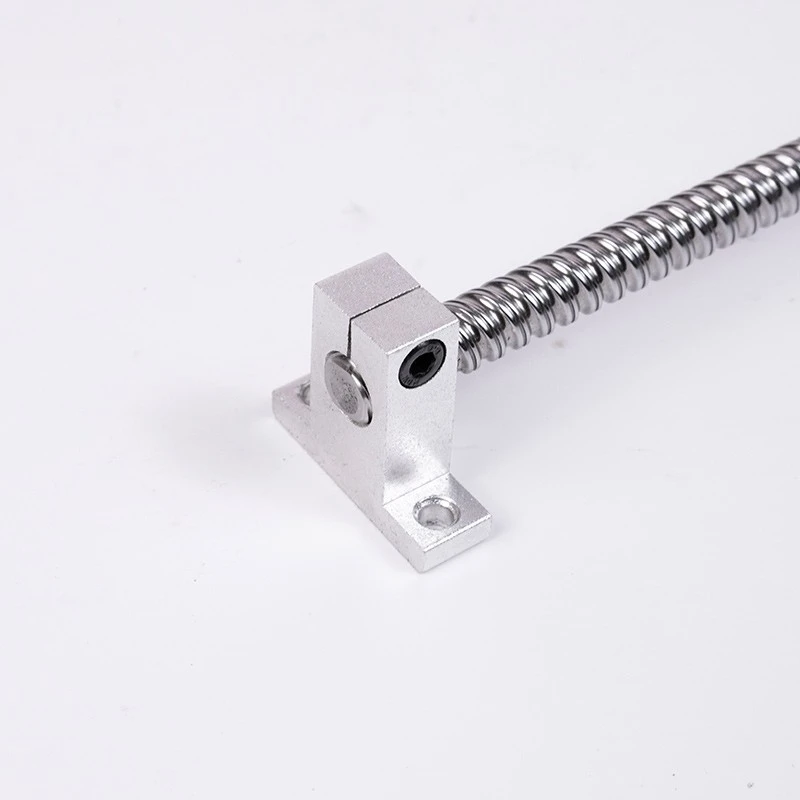
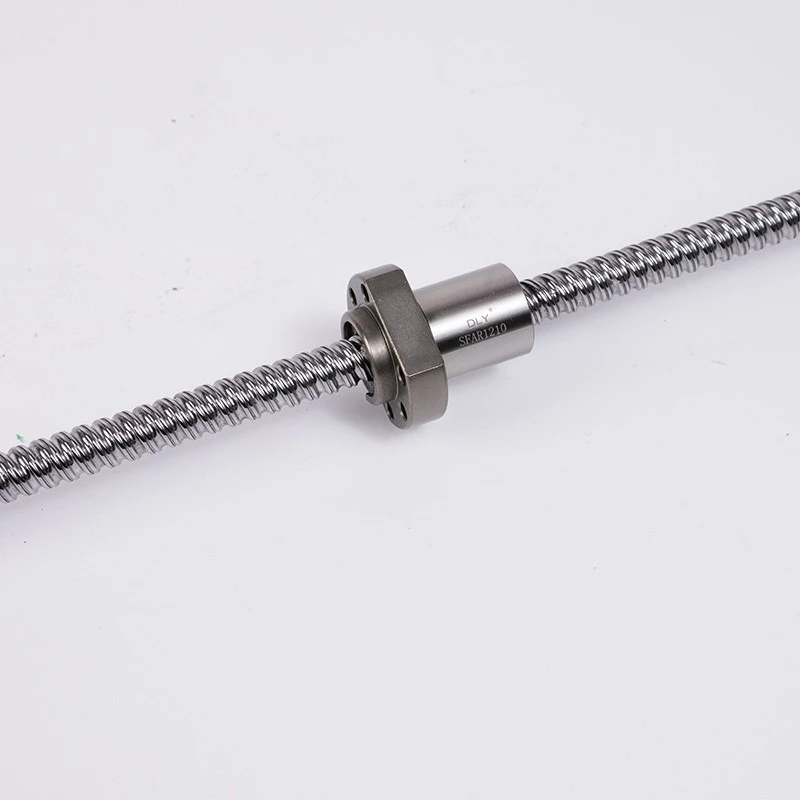
Nut size or appearance alone does not identify its preload level. The internal ball matching, raceway design and measured torque must also be confirmed.
How Is Preload Specified?
Preload may be expressed as an axial force or as a percentage of the ball screw's basic dynamic load rating. The appropriate value depends on the manufacturer's design, nut structure and application requirements.
The final selection should consider:
- Required axial rigidity
- Allowable axial clearance
- External axial load
- Speed and acceleration
- Duty cycle
- Allowable friction torque
- Temperature rise
- Required service life
A preload percentage should not be chosen without checking the corresponding friction, internal load and fatigue-life effects.
How Is Ball Nut Preload Checked?
Directly measuring the internal preload force after assembly is not always practical. Manufacturers commonly evaluate the condition through axial-clearance measurement and controlled measurement of the ball nut's dynamic torque.
During a dynamic torque test, the nut or screw is rotated at a specified speed while the running torque is recorded over the effective travel. The measurement should be performed under defined lubrication, temperature and installation conditions.
Measured torque is not produced by preload alone. It can also include:
- Seal or wiper resistance
- Lubricant resistance
- Ball recirculation resistance
- Screw lead and raceway variation
- Misalignment during testing
For this reason, a simple torque-wrench reading should not be treated as an exact measurement of preload force. The test method and acceptance range should be agreed before production.
Ball Nut Preload and Bearing Preload
A rotating-ball-nut assembly contains two different preload conditions that should not be confused.
Ball nut preload acts between the balls and the screw-and-nut raceways. It controls axial clearance and rigidity within the ball screw pair.
Support-bearing preload acts within the bearings that allow the nut housing to rotate. It controls the axial and radial rigidity of the rotating support assembly.
Both affect the measured torque and positioning behavior of the axis. Excessive bearing preload can produce high temperature even when the ball nut preload itself is correct.
For an explanation of the complete mechanism, see the role of a rotating ball nut in a linear motion system .
What Happens If Preload Is Too High?
Excessive preload increases internal ball load even before the axis carries an external working load. Possible consequences include:
- Higher starting and running torque
- Increased motor load
- Greater heat generation
- Lubricant deterioration
- Accelerated raceway and ball wear
- Reduced fatigue life
- Possible sticking at local lead-error points
A nut that feels unusually tight should not automatically be considered more accurate. High or irregular torque can indicate excessive preload, contamination, poor lubrication, raceway damage or mounting misalignment.
What Happens If Preload Is Too Low?
Insufficient preload may leave measurable axial clearance or provide less rigidity than the application requires. Possible symptoms include lost motion during reversal, reduced positioning response and movement under alternating axial loads.
Vibration and noise should not automatically be attributed to low preload. Misalignment, damaged balls, poor lubrication, loose support bearings and an unsuitable drive structure can produce similar symptoms.
Selecting the Appropriate Preload
The best preload is the lowest level that satisfies the required axial clearance and rigidity under actual operating conditions. This approach limits unnecessary heat and internal fatigue loading.
Before confirming the specification, provide:
- Screw diameter and lead
- Nut type and available installation space
- Maximum and average axial load
- Operating speed and acceleration
- Required axial clearance or rigidity
- Positioning accuracy and repeatability targets
- Operating temperature and duty cycle
- Lubrication and environmental requirements
Lubrication conditions can significantly change the measured torque. For special applications, such as a rotating ball nut used in a vacuum environment , lubricant selection must be evaluated together with the preload.
Conclusion
Preload in a rotating ball nut is the internal load between the rolling balls and opposing raceway surfaces. It is used to reduce axial clearance and improve axial rigidity, particularly when the axis frequently reverses direction or must respond consistently to changing loads.
Preload must be balanced against friction torque, temperature and service life. It should be established through the nut structure, ball matching or double-nut adjustment and then verified under controlled measurement conditions-not created by tightening the nut flange against the machine.
View DLY ball nut products for available nut structures and dimensions.
Send DLY your screw size, load, speed, required clearance and installation drawing for an initial preload and ball nut feasibility review.
Email: export@dlybearing.com
Contact DLY


